It can seem backwards:
Why seal all the gaps in a house if we’re just going to cut a 6-inch hole in the wall and bring outside air back in?
The difference is control.
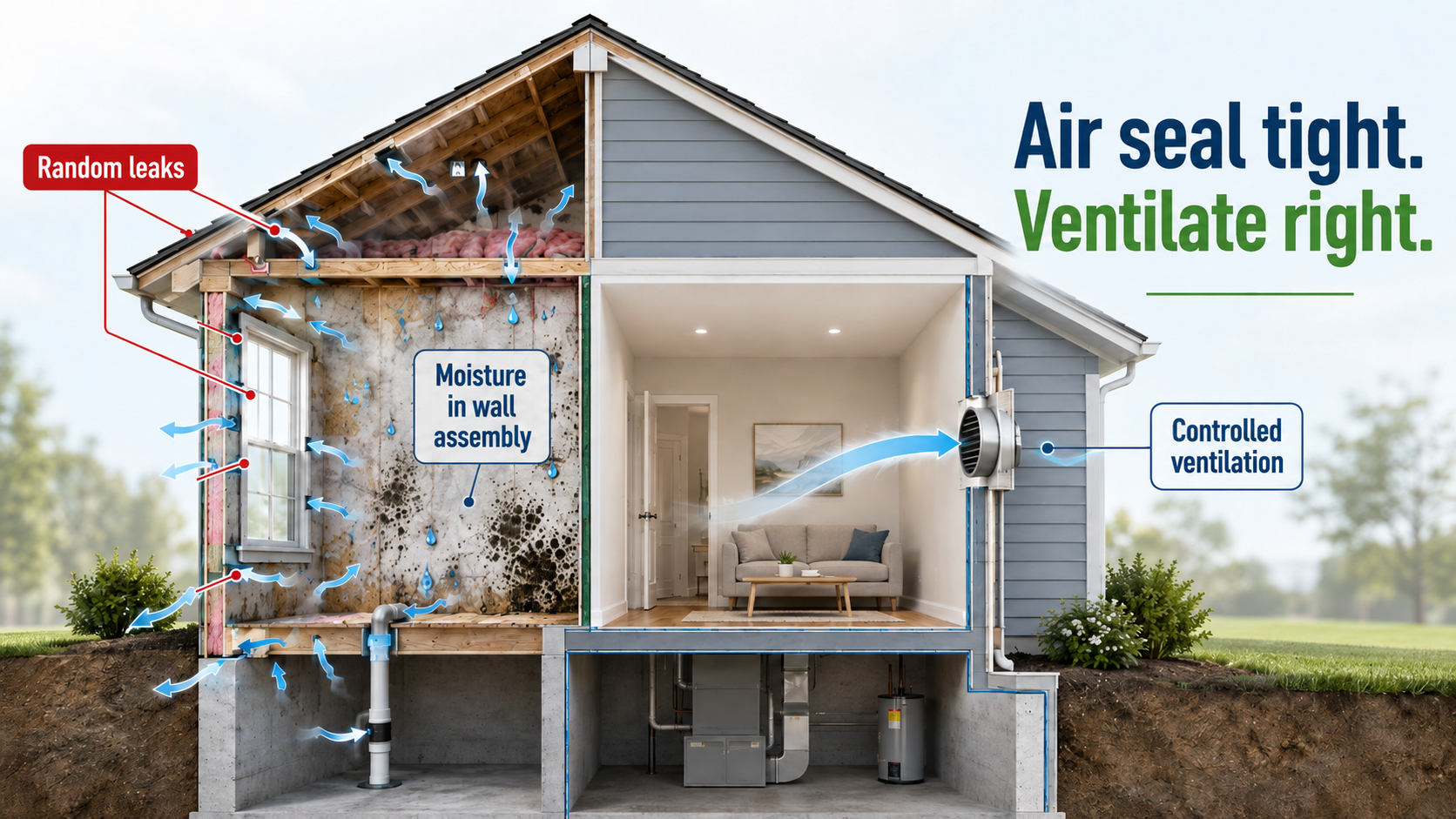
Without air sealing, outside air comes through hundreds of random cracks and gaps throughout the house. How much air moves depends on wind, temperature, and pressure—and that moving air carries heat and moisture with it.
That matters because air leaking through walls, ceilings, and other building assemblies can carry moisture into places where it may not dry easily. If that warm, humid air reaches a cold surface inside the wall or roof assembly, it can condense into liquid water. Over time, that can contribute to wet insulation, wood deterioration, and mold growth.
Air sealing helps keep that moisture-laden air from moving through the building assembly in the first place.
Then mechanical ventilation brings fresh air into the house through a planned opening, at a controlled rate, when and where we want it—instead of allowing air to randomly travel through walls and ceilings.
The goal isn’t to keep outside air out.
The goal is to control how it gets in and keep it from traveling through places where it can cause problems.
Seal tight. Ventilate right.